Ganoderma & Health
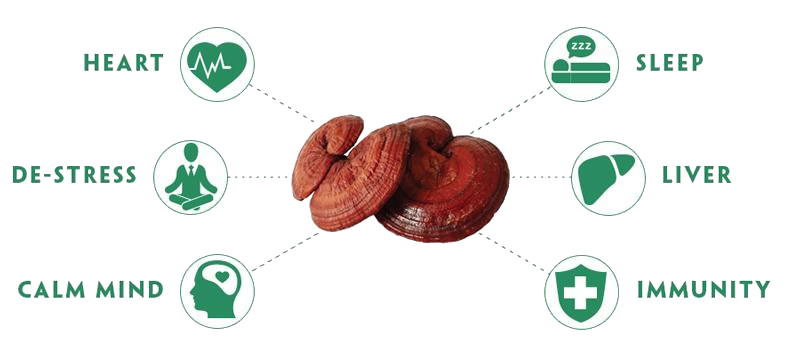
Reishi mushrooms also known as Ganoderma lucidum and lingzhi, have been a part of some traditional medicine practices for more than 2,000 years.
The reishi mushroom, is a fungus that grows in various hot and humid locations in for many years, this fungus has been a staple in Eastern medicine.
- https://www.ncbi.nlm.nih.gov/books/NBK92757/
- https://www.ncbi.nlm.nih.gov/pubmed/16428086/
- https://www.ncbi.nlm.nih.gov/books/NBK92757/
These mushrooms are large and black, with a glossy exterior and a woody texture.
Ganoderma mushrooms are composed of various bioactive compounds, including terpenoids, steroids, phenols, nucleotides, glycoproteins, and polysaccharides. They are especially rich in lysine and leucine, two essential amino acids. The mushrooms are also significantly higher in polyunsaturated fatty acids.
In addition, about 28% of the mushrooms is carbohydrate, 5% is crude fat, 59% is crude fiber, and 8% is crude protein
Ganoderma mushrooms can play a major role in cancer prevention. They may also help treat depression and boost the immune system. Some studies also suggest that they may have a beneficial effect on heart health.
In ancient China, the dried powder of the ganoderma mushroom was used as a cancer chemotherapy agent. In recent studies, the mushroom was also found to suppress the migration of breast and prostate cancer cells.
Another study focused on the mushroom’s ability to enhance tumor response to treatment and even stimulate host immunity.
The polysaccharides in the mushrooms also play key roles in cancer treatment. They have been found to show potential preventive effects against cancers of the lungs, liver, skin, blood, and colon.
Ganoderma mushrooms possess potent immunostimulating properties and are often considered the primary choice of treatment for any immune deficiency disease. In studies, these could boost the immune response in the organisms, which was reduced due to heavy-load exercise.
The polysaccharides in the mushrooms achieved this by elevating the concentrations of peripheral white blood cells and boosting the function of cell macrophages.
Some types of ganoderma mushrooms were also found to modulate inflammation pathways in white blood cells.
Ganoderma mushrooms were used in ancient China to strengthen cardiac function.
The study shows that the mushrooms may help lower cholesterol levels in individuals with diabetes. The mushrooms were also found to elevate good cholesterol levels.
The cardioprotective properties of ganoderma mushrooms are yet to be investigated.
Extracts of ganoderma mushrooms have been observed to have anti-diabetic potential. In mice studies, these mushrooms increased plasma insulin levels and reduced plasma sugar levels.
These mushrooms were also found to prevent the progression of diabetic renal complications . They were identified to be potentially beneficial in treating type 2 diabetes. They achieve this by suppressing certain enzymes involved in gluconeogenesis.
Ganoderma mushrooms are also thought to improve the antioxidant status of an individual. This way, they may protect your body’s cells from free radicals. The mushrooms may improve antioxidant status, given the presence of beneficial compounds.
Ganoderma mushrooms are being extensively studied only since recent times. As the future unfolds, we expect to discover more such beneficial effects.